
Google AI Search: How AI Is Changing SEO and Business Visibility
 287
287
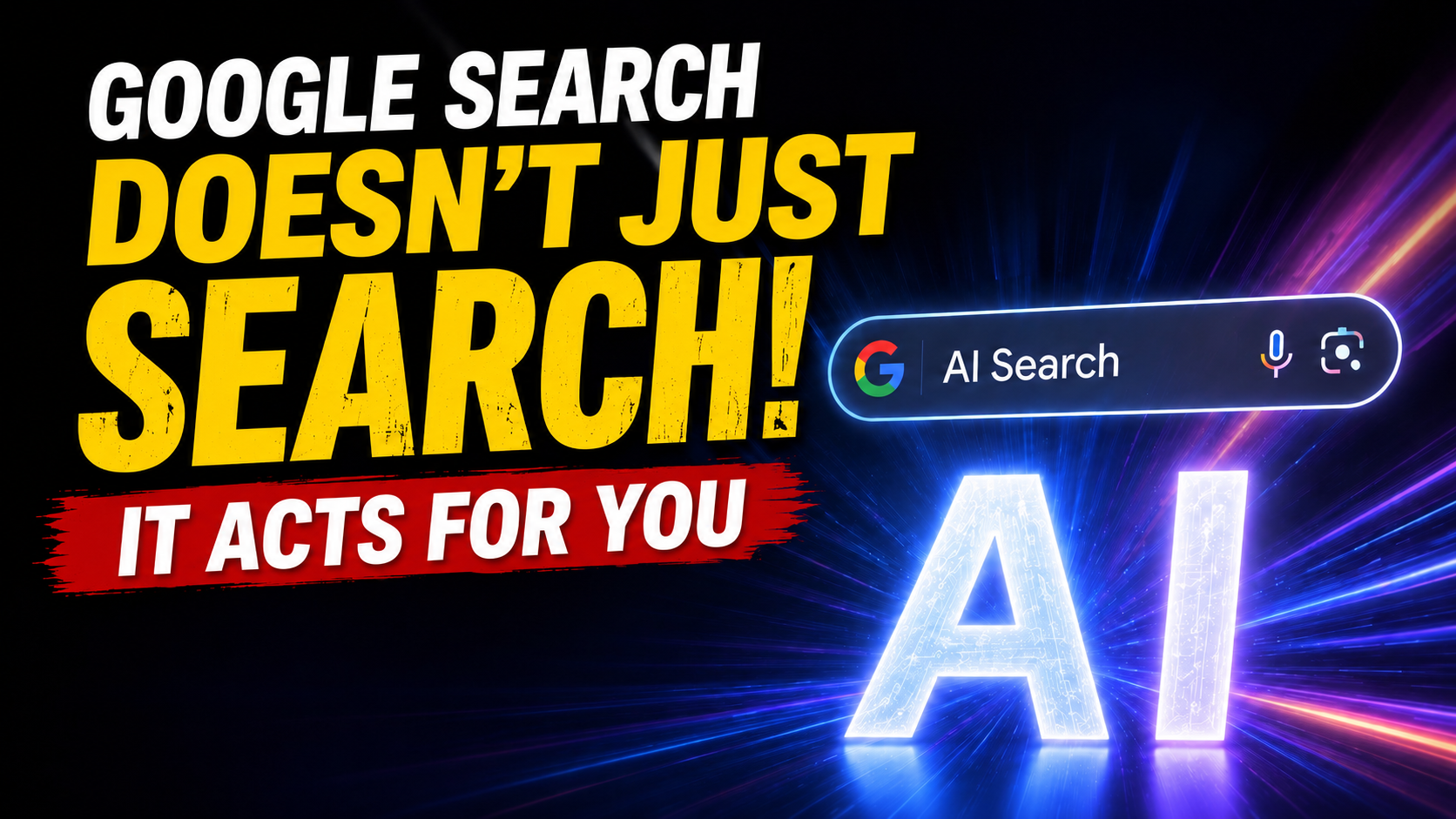
Google AI Search is changing how people search online. Google is no longer just showing a list of websites. It is gradually becoming an AI-powered assistant that can understand context, process complex questions and generate answers directly inside the search experience.
This is not just another interface update. It is a major shift in how the internet works.
Until recently, users typed a query, opened several websites, compared information, refined their search and built their own final answer. Now Google is trying to do more of that work for them.
For users, this is convenient. For businesses, it is a warning sign.
What Is Google AI Search?
Google AI Search is a new approach to search where artificial intelligence does more than find pages. It helps users understand a topic, compare options, ask follow-up questions and make decisions faster.
Google is developing AI Mode, AI agents, personal intelligence and new ways to interact with search beyond simple text queries. Search is becoming less about typing keywords and more about explaining what you need so the system can interpret your intent.
In simple terms, Google is moving from “Here are the websites you can visit” to “Here is the answer I prepared for you.”
This changes the role of every business website.
Why This Matters for Business
If users receive answers directly inside Google, they may not immediately click through to a website. That means businesses are no longer competing only for traditional search rankings.
They also need to be understood by AI systems.
A business now has to answer a deeper set of questions:
Who are you?
What do you offer?
Why should people trust you?
What makes your product or service useful?
Why should an AI-powered search experience include your brand in its answer?
This is why classic SEO is expanding. Keywords still matter, but they are no longer enough on their own. The new search environment is also about AI visibility, digital trust, brand reputation, content quality and a clear online presence.
Traditional SEO Is No Longer Enough
Many businesses still treat SEO as a technical checklist: build a website, add keywords, publish a few pages and wait for traffic.
That approach is becoming weaker.
AI-powered search looks at the broader picture. A single page is not enough if the brand behind it is unclear, inactive or poorly explained.
Google and other AI-driven systems increasingly need structured, consistent and trustworthy information. They need to understand what your business does, who it serves, where it operates and why it is relevant to a user’s specific question.
This means your website, blog, social media, reviews, case studies, service pages and local information all work together. They form your digital footprint.
The stronger and clearer that footprint is, the easier it is for AI systems to understand your business.
What Will Change for Websites?
Websites are not becoming irrelevant. Weak websites are.
A modern business website can no longer function only as an online brochure. It has to become a source of trust, clarity and useful information.
Your website should clearly explain your services, benefits, location, pricing logic, process, experience and answers to common client questions. It should show proof: real projects, reviews, examples, results and expert content.
Important website sections now include:
- service pages;
- FAQ pages;
- blog articles;
- case studies;
- client reviews;
- local business information;
- clear internal linking;
- structured content.
This helps both traditional SEO and AI-driven search. The more organized your information is, the easier it becomes for search systems to understand and recommend your business.
If your website has not been updated for a long time, a professional website audit, redesign or new content structure may be the right place to start.
How Businesses Can Prepare for AI-Driven Search
The first step is to review the website. It should not only look good. It should explain the business clearly and build trust from the first screen.
The second step is content. Blog articles, guides, expert explanations, service descriptions and case studies help search systems understand what your company is genuinely good at.
The third step is reputation. Reviews, mentions, social media activity and consistent brand communication create signals of credibility.
The fourth step is internal structure. Your website should not be a collection of isolated pages. Service pages, blog posts and case studies should be connected through internal links so both users and search engines can follow the logic of your business.
The fifth step is to think beyond rankings. In the new search environment, the question is not only whether your website appears in Google. The question is whether AI can interpret your brand correctly and consider it useful enough to recommend.
For strong online visibility, businesses need more than technical SEO. They need content marketing, SMM, reputation work, website structure and a clear brand voice.
AI Agents Will Change the Customer Journey
Google is also developing AI agents that can help users monitor information, compare options and complete parts of a task in the background.
This means a future customer may not search for your business manually. Their AI assistant may search, compare and filter options for them.
That creates a new challenge.
Your business must be visible, but it must also be understandable. AI systems need to recognize what you offer, why it is relevant and whether your brand looks reliable.
In this new customer journey, the first point of contact may not be a person typing your company name into Google.
It may be an AI assistant deciding which businesses are worth showing.
What Businesses Should Do Now
Businesses should start with a simple but serious audit.
Is the website clear?
Are the services properly explained?
Does the content answer real customer questions?
Are there reviews, examples and trust signals?
Is the company active online?
Is the brand consistent across the website, blog, social media and external platforms?
If the answer is no, the business is vulnerable in the new search environment.
The practical next steps are clear: improve the website structure, update service pages, publish useful content, add internal links, collect reviews, show real cases and make sure the brand has a consistent digital presence.
This is not about chasing every new AI trend. It is about making your business understandable to both people and machines.
Conclusion
AI-powered search does not mean the end of websites.
It means the end of weak websites that do not explain value, build trust or provide useful content.
SEO is not dead. It is evolving into something broader: AI visibility, digital trust and complete online brand presence.
In the new reality, businesses should not only ask:
Will customers find us?
They should ask:
Will their AI assistant recommend us?